






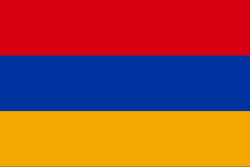
A competitive FPS player who consistently performs above the average across a wide range of titles. Has reached Masters in Apex Legends, Diamond in Valorant, Unreal in Fortnite, and Diamond in Rainbow Six Siege, reflecting a high level of performance across different competitive systems and metas.
Demonstrates strong mechanical precision with controlled aim, fast reaction time, and the ability to maintain accuracy under pressure. Decision making remains composed and efficient, allowing for quick reads on opponents and situations without unnecessary hesitation.
Adapts quickly to varying game mechanics and pacing while maintaining consistent performance. Shows strong positioning and awareness, using map knowledge and timing to create advantages rather than relying purely on mechanical skill. Game sense is well developed, with a clear understanding of rotations, engagements, and risk management.
Overall performance reflects a combination of technical skill, consistency, and discipline, with a clear focus on improvement and reliable execution across competitive environments.
Adaptation, introspection, pattern recognition, and metafunction form the core of high-level competitive gaming, shaping not only how a player reacts in the moment but also how they develop over time. Adaptation allows a player to respond quickly to shifting in-game circumstances, opponent strategies, and evolving metas. It is not just about reflexes or mechanical skill, but about anticipating changes, adjusting tactics, and remaining flexible under pressure.
Introspection complements adaptation by enabling a player to critically analyze past performances, identify mistakes, and refine strategies. This self-evaluation is systematic, breaking down both successes and failures to improve decision making, positioning, and execution in future matches. Pattern recognition extends this cognitive toolkit by allowing players to detect recurring behaviors in opponents, common sequences in maps, or subtle cues that indicate an opportunity or threat. Over time, this creates predictive insight that can be leveraged to control engagements and gain strategic advantages..
Metafunction, in this context, refers to the player's ability to understand and manipulate the underlying rules, systems, and dynamics of the game itself. It goes beyond simple strategy, involving an awareness of how the game works at a fundamental level—how mechanics interact, how balance shifts, and how the environment can be used to create advantages. This understanding allows a player to not only play the game but to shape their approach in ways that exploit its core systems, creating opportunities that opponents may not recognize.
In competitive gaming, the combination of these cognitive processes is often the defining factor between above-average play and elite performance, allowing a player to maintain consistency, anticipate challenges, and evolve alongside the game itself.
Armenian Kurds are a historically rooted ethnic minority in Armenia, with a presence that dates back many centuries. Kurdish tribes moved into the South Caucasus region during the periods of the Ottoman Empire and the Safavid Empire, when shifting borders, wars, and tribal migrations brought Kurdish populations into areas that are now part of modern Armenia. Over time, these communities settled primarily in rural and mountainous regions, maintaining a pastoral lifestyle centered on animal herding and agriculture.
A large majority of Kurds in Armenia today belong to the Yazidi community, followers of Yazidism, which distinguishes them from Muslim Kurds found in other parts of the Middle East. While Yazidis are ethnically Kurdish in language and heritage (many speak Kurmanji Kurdish), they strongly identify as a separate religious and cultural group. In fact, Yazidis are the largest minority in Armenia, and their presence has been especially significant since the early 20th century, when many fled persecution and violence in the collapsing Ottoman Empire.
The relationship between Armenians and Kurds has been complex and shaped by shared as well as conflicting historical experiences. During the Armenian Genocide, carried out by the Ottoman authorities, some Kurdish groups participated in attacks against Armenians, often under pressure or as part of imperial policies, while other Kurds helped shelter and save Armenian lives. These mixed experiences left a complicated legacy, but also instances of solidarity that are remembered today.
During the Soviet period, when Armenia became part of the Soviet Union in 1922, Kurdish cultural life was officially recognized to some extent. Kurdish-language schools, publications, and radio broadcasts were supported for a time, although policies shifted over the decades. Some Kurds were also deported or resettled during Stalinist campaigns, which disrupted communities across the region.
Since Armenia regained independence in 1991, Kurdish (especially Yazidi) communities have been formally recognized as a national minority. They have the right to preserve their language, traditions, and religion, and there are Yazidi schools, cultural organizations, and media outlets operating in the country. One notable symbol of their presence is the Yazidi temple in the village of Aknalich, which is the largest Yazidi temple in the world and serves as a cultural and religious center.
Today, Armenian Kurds continue to balance integration into Armenian society with the preservation of their distinct identity. While many live in rural areas and face economic challenges, they remain an important part of Armenia’s multicultural landscape, contributing to its diversity through language, music, traditions, and religious life.